Our health insurance experts can get most of our clients covered by their health insurance plan for their permanent hair removal treatment.
The Real You Guide to Electrolysis Hair Removal
What electrolysis is, how electrolysis hair removal works, and what you can realistically expect.
If you’ve been looking into permanent hair removal, you’ve probably considered other methods of hair removal. The explanation may feel overly clinical or frustratingly vague, and neither of those approaches actually helps you make a confident, informed decision. Here’s a download of what we’ll cover in this article, so that you can know exactly what you’re getting into and whether it aligns with your goals:
What Electrolysis Actually Is
At its core, electrolysis hair removal is a method that permanently disables hair growth at the follicle. The follicle is the structure beneath the surface of your skin responsible for producing each individual hair. Unlike temporary methods that remove hair above the skin, electrolysis targets the root system itself.
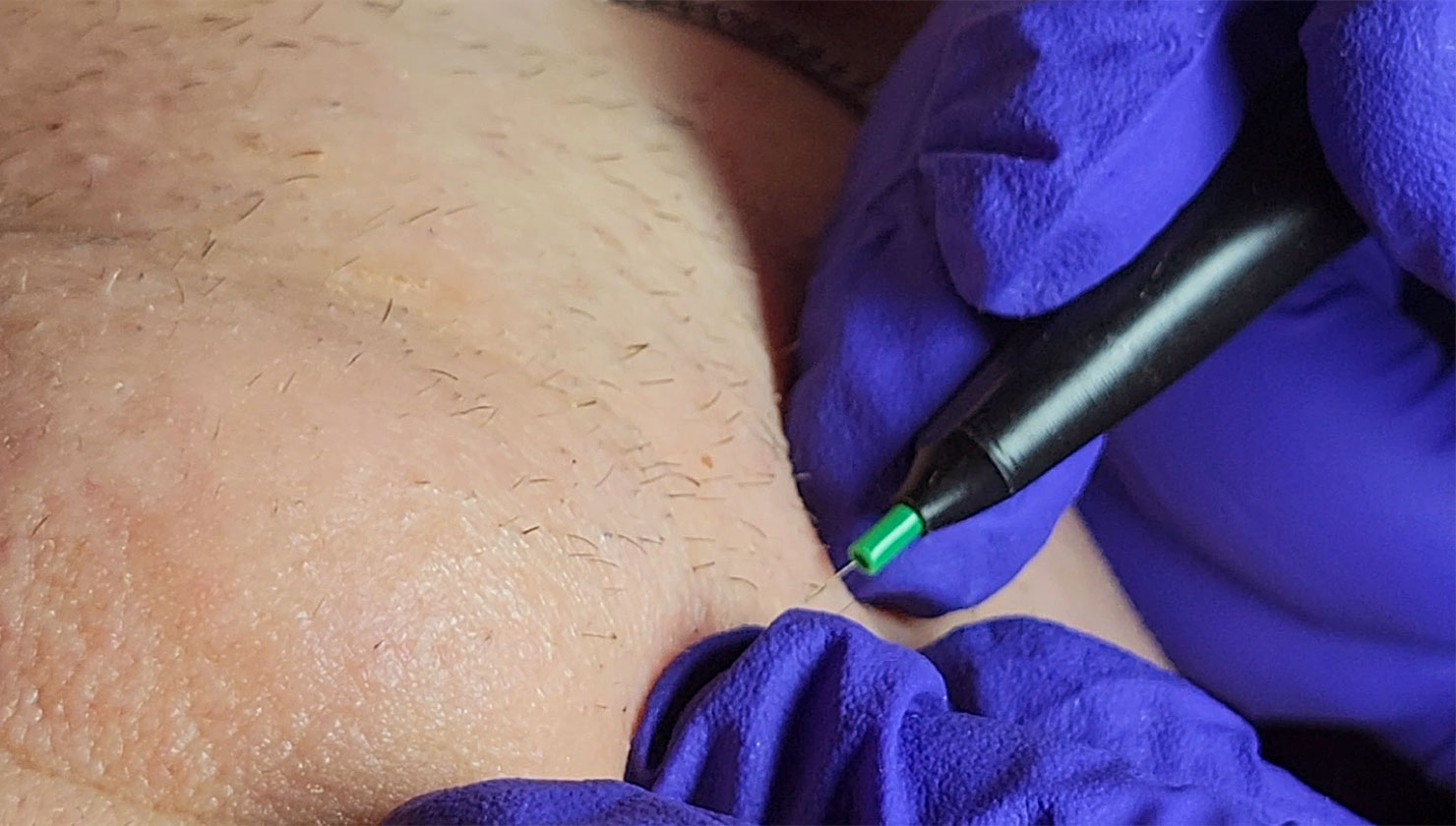
During treatment, an electrologist inserts a probe into the natural opening of the hair follicle. The probe is so small that the skin is not cut or pierced. A carefully calibrated electrical current is delivered directly to the follicle to destroy its ability to grow hair. Once the charge is delivered, the treated hair slides out easily.
One of the reasons electrolysis is considered so reliable is that it does not depend on skin pigment or contrast. This means that it is equally effective on blonde, red, gray, or white hair. It is safe for all skin tones and a wide range of hair types, including hormonally driven growth.
For many of our clients, this isn’t just about aesthetics—it’s about comfort, confidence, or gender-affirming care. That’s why we approach this work with both technical precision no matter the type of hair.
Is Electrolysis Actually Permanent?
Electrolysis is the only FDA-recognized method of permanent hair removal, and when a follicle is properly treated, it is permanently disabled. That said, hair does not grow all at once or on a uniform schedule. Instead, your body cycles different hairs in and out of active growth phases, which means that at any given time, only a percentage of your follicles are treatable.
What many people interpret as hair “regrowth” is usually just hair from a follicle that was not active at the time of earlier treatments. It’s also worth noting that while electrolysis treatment permanently removes existing follicles, it cannot prevent your body from developing new ones in the future due to hormonal shifts, aging, or underlying conditions.
Why Electrolysis Takes Time
One of the most common concerns we hear is about how long the process takes. It’s completely reasonable to want clarity around the number of sessions before committing to electrolysis. Electrolysis is a very methodical process, because each follicle must be treated individually and at the correct point in its growth cycle.
In the beginning, most clients come in on a weekly or biweekly basis to start clearing the area and catching as many active hairs as possible, and as progress builds, the sessions are less than 30 minutes.
For many areas, especially those influenced by hormones such as the face or bikini line, a full treatment plan can take anywhere from 12 to 24 months. Different areas of the body may resolve at different timelines. Smaller or more stable areas may resolve more quickly. While a year of treatment can feel long at first glance, electrolysis works according to biology. Trying to rush the process often leads to increased irritation and slower overall progress.
Typical electrolysis timeline:
- Initial phase: Regular weekly or biweekly sessions focused on clearing visible hair
- Reduction phase: Hair becomes finer and less dense, with shorter sessions
- Maintenance phase: Occasional treatments to catch remaining or newly active follicles
What electrolysis feels like
It’s important to talk honestly about sensation. While electrolysis hair removal is very tolerable for most people, it isn’t completely painless.
Sensation can vary based on:
- The area being treated (facial areas tend to be more sensitive)
- Hair density and coarseness
- Your individual sensitivity and pain tolerance
- Timing within your menstrual cycle (for some clients)
Clients often describe the feeling as a combination of heat, tingling, or a quick, localized pinch. The intensity can vary depending on the area being treated, the density of the hair, and your own sensitivity levels. Areas like the upper lip tend to feel more intense than places like the arms or legs, simply because of nerve concentration.
The good news is that we can adjust the pace and settings of your treatment to make it as manageable as possible. Using numbing cream about an hour before your appointment can be used to help mitigate some of the pain. Many clients find that as hair becomes finer and less dense over time, the overall sensation becomes easier to tolerate.
Aftercare and Skin Support
One of the most helpful things to understand about electrolysis aftercare is that simpler is usually better, especially in the first 24 hours after treatment. After you perform electrolysis on an area, you should keep it clean, avoid unnecessary touching, and give your skin time to heal. Avoiding heat, sweat, and heavy products will go a long way in supporting proper healing.
After your electrolysis treatment:
- Keep the area clean and avoid touching it unnecessarily
- Skip heat, sweating, and heavy skincare products for 24 hours
- Use gentle hydration and sun protection as needed
What Healing Looks Like
After a session of electrolysis treatment, your skin will go through a normal healing response. Understanding that process can make a big difference in how you experience it. It’s common to see some redness, mild swelling, or a feeling of warmth in the treated area, and occasionally you may notice tiny scabs forming as the skin repairs itself. These reactions are typically short-lived, with most visible effects resolving within 24 to 72 hours, and many clients notice that their skin becomes less reactive as treatments progress.
Common and expected reactions:
- Redness and slight swelling
- Warmth or sensitivity
- Small, temporary scabs
Less common:
- Prolonged irritation beyond a few days
- Signs of infection (rare with proper care)
- Ongoing bleeding
When performed correctly, electrolysis has a strong safety record, and concerns like scarring or pigmentation changes are quite rare.
Electrolysis vs. Laser Hair Removal
If you’ve also been considering laser, it’s helpful to understand how laser hair removal and electrolysis actually compare.
Laser hair removal works by targeting pigment in the hair to reduce growth over time. Because it relies on contrast, it tends to be most effective on darker hair and lighter skin tones. In some cases, particularly on the face, laser can even stimulate additional growth.
By contrast, electrolysis works independently of pigment and focuses on permanently disabling each follicle. Electrolysis is the more definitive option when your goal is complete and lasting removal. Many clients come to electrolysis after laser has reduced their hair but left behind finer or lighter strands that laser cannot effectively treat.
Who Electrolysis Is For
We work with a wide range of clients seeking permanent hair removal, including those pursuing gender-affirming electrolysis, individuals managing hormonal hair growth related to conditions like PCOS, and people who simply want a permanent solution after years of temporary methods.
Electrolysis may be a good fit if you:
- Want permanent hair removal, not ongoing maintenance
- Have light, gray, red, or stubborn hair that laser can’t treat
- Are seeking gender-affirming electrolysis care
- Experience hormonal hair growth (PCOS, menopause, etc.)
- Struggle temporary methods like waxing or shaving
Safety and Medical Considerations
While electrolysis treatment is generally very safe, we always take an individualized approach, especially when there are underlying medical factors to consider. Conditions such as diabetes and autoimmune disorders can influence healing. In addition, situations like pregnancy and implanted medical devices may require treatment adjustments. Our goal is to make sure that your treatment plan is both effective and appropriate for your specific situation, and we will always be transparent about any precautions that need to be taken.
Cost and long term value
Total investment is typically based on treatment time rather than the number of hairs treated.
Treatment time depends on factors like the size of the area, the density of the hair, and how consistently you’re able to come in for treatment. While it can add up over time, many clients find that the value pays off in the long run. Electrolysis is permanent, eliminating the need for ongoing spending on temporary solutions.
Factors that influence electrolysis cost:
- Size of the treatment area
- Hair density and growth patterns
- Session length and frequency
- Consistency of appointments
We’re happy to help you plan a schedule that fits both your goals and your budget so the process feels manageable rather than overwhelming.
Insurance and Gender-Affirming Care
In some cases, electrolysis for gender-affirming care may be eligible for insurance coverage, particularly when it is required for surgical preparation or deemed medically necessary.
The claims process can be complex, and approval is not guaranteed, but we do offer support with documentation and navigating requirements so you don’t have to figure it out on your own. Having guidance through that process can make a meaningful difference in accessing care.
Choosing the Right Clinic
Finding the right provider for electrolysis hair removal is an important part of the experience, because this is a process that requires both time and trust.
When choosing a clinic, look for:
- Clear, honest communication about timelines and results
- Strong hygiene and safety practices
- Experience with your hair type and goals
- An environment where you feel comfortable and respected
You should feel comfortable asking questions, receiving clear answers, and being fully yourself during your appointments, and it’s worth paying attention to how a provider communicates, how they approach hygiene and safety, and whether they are transparent about expectations.
The Bottom Line for Electrolysis
If you’re looking for a true, lasting solution, electrolysis for permanent hair removal is the most reliable option available. However, it does require patience, consistency, and a willingness to work with your body’s natural cycles.
Our role is to guide you through that process with clarity, honesty, and care, so you always know what’s happening, why it’s happening, and what to expect next—because informed clients tend to have the best outcomes.
Start your hair-removal journey with us
Tags:hair removal